High Protein Puppy Food: Top Picks, Benefits & Feeding Tips
DogMealGuide Editorial Team
DogMealGuide Editorial Team provides research-backed, practical advice to help dog owners make better nutrition decisions for their pets.
High Protein Puppy Food: Top Picks, Benefits & Feeding Tips
Welcoming a new puppy into your home is a big step. Puppies grow quickly, so the food you choose matters. A formula that supports steady, healthy development helps your puppy build strong bones and muscles during this important first year.
Protein is a central part of any puppy diet. It provides the amino acids puppies need to build muscle, support organs, and keep their energy steady through a day full of play and growth. A high protein puppy food can be a great fit for many puppies — though the best choice always depends on your individual dog.

In this guide, we'll cover what high-protein puppy food is, which nutrients matter most, how to read a label, and how to choose a formula that fits your puppy's size and needs.
Key Takeaways
- Early nutrition supports healthy bone and muscle development.
- Amino acids are essential building blocks for growing puppies.
- Quality ingredients help maintain steady energy throughout the day.
- A balanced, complete diet matters more than any single ingredient on the label.
- Your veterinarian can help tailor nutrition to your puppy's breed and needs.
What Makes High Protein Puppy Food Different
Your puppy is always growing, and their daily needs differ from an adult dog's. Puppies grow fast and use more energy per pound, so they generally need more protein and calories than adult dogs. Feeding a puppy-appropriate formula supports this growth.
Protein is the main building block for your dog's body. It helps build lean muscle and supports healthy bones, organs, and tissue repair as a puppy develops. Puppy foods formulated for growth provide the amino acids a growing dog needs.
Protein also plays a role in immune health, since a puppy's immune system is still developing. Beyond size, good nutrition helps support a strong foundation for overall health.
Understanding Growth Milestones and Nutritional Requirements
Every puppy grows at its own pace, so nutritional needs vary by breed, size, and life stage. Choosing a complete puppy food helps support these changes through the first year.
In the early months, puppies gain bone and muscle quickly. A diet appropriate for their stage of life supports steady, healthy growth. That said, no single food can prevent every health concern — the right formula simply gives your puppy what they need to develop well.
Pay attention to your puppy's weight and body shape. A healthy puppy should have a clear waist and a slight belly tuck. If they're gaining weight too quickly, reduce portions to help avoid excess weight, and ask your vet if you're unsure about the right amount.
Your veterinarian is the best guide for a feeding plan. Different breeds have different needs, especially large breeds, and a vet can help you adjust portions and food choices as your puppy grows.
Are Grain-Free Puppy Foods Better?
Many owners wonder whether a grain-free puppy food is the healthier choice. The short answer is that grain-free is not automatically better. Some puppies do well on grain-free diets, but most puppies thrive on a complete, balanced food that includes grains.
Grains are not "fillers" by default. When part of a balanced recipe, they provide carbohydrates, fiber, and other nutrients. There's no strong evidence that grain-free food automatically improves digestion, skin, or coat, or that it causes fewer problems than a food that contains grains.
Grain-free formulas can be a good option for puppies with a confirmed grain sensitivity, or simply for owners who prefer them. The most important factors are that the food is complete and balanced for growth and that your puppy does well on it. If you're unsure what's best, discuss it with your veterinarian rather than assuming one type is universally superior.
| Feature | Standard Puppy Food | High Protein Grain-Free |
|---|---|---|
| Primary Protein Sources | Animal and/or plant-based | Usually animal-based |
| Grains | May include | Typically excluded |
| Suitability | Most puppies | Some puppies, depending on preference or sensitivity |
Dry Kibble Versus Wet Food for Puppies
Both dry and wet puppy foods have a place, and neither is inherently better.
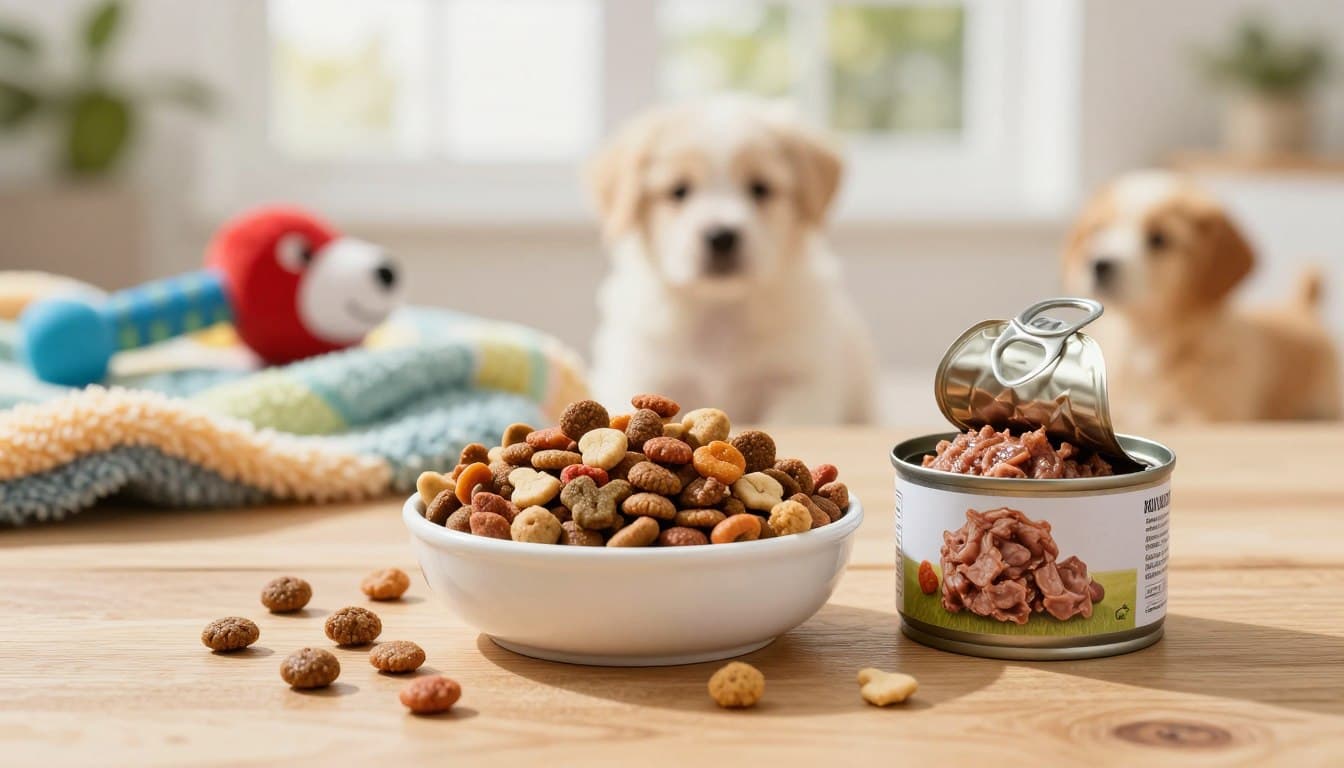
Dry kibble is convenient to store and measure, and some owners find the crunchy texture helps keep teeth cleaner. Wet food provides more moisture, which can support hydration and appeal to picky eaters. Many owners mix the two — using kibble as the base and adding a little wet food for taste and texture.
The right choice depends on your puppy's preferences, your routine, and their overall health. Consistency is the important part.
| Feature | Dry Kibble | Wet Food |
|---|---|---|
| Hydration | Low | High |
| Dental Cleaning | May help | Minimal impact |
| Convenience | High | Moderate |
Feeding Puppies Cat Food or Adult Food
It can be tempting to save money or time by sharing your cat's or older dog's food with a puppy, but it's best avoided.
Can Puppies Eat Cat Food?
Cat food is formulated for cats, not puppies. It's not that cat food is "dangerous" simply because it's protein-rich or contains taurine — those nutrients aren't the problem by themselves. The issue is that cat food is not designed to provide the complete and balanced nutrient profile a growing puppy needs.
A small accidental bite is generally not a cause for alarm. The real concern is using cat food as a regular substitute, which can leave a puppy short of the nutrients a growth formula provides and potentially cause digestive upset. Stick to a food made for puppies.
Can Puppies Eat Adult Dog Food?
Adult-maintenance food is formulated for fully grown dogs. It may not provide the higher levels of protein, energy, and certain minerals — like calcium and phosphorus — that puppies need during growth.
That doesn't mean a bite of adult food automatically causes stunted growth or bone disease. The risk comes from feeding it as the main diet over time, when a growing puppy may not get the balance they need. For the first year or longer in large breeds, a complete puppy formula is the safer choice.
Examples of High Protein Puppy Food Options
There's no single "best" puppy food for every dog. The right choice depends on your puppy's size, life stage, activity level, and food tolerance. These well-known options are a useful starting point, but you should evaluate each against your own puppy's needs.
Bully Max Puppy Food
Bully Max is known for a calorie-dense, high-protein formula aimed at puppies that need extra energy and muscle support. It may suit active or performance breeds that burn a lot of calories, though its calorie density means portions need careful attention to avoid overfeeding.
Taste of the Wild Puppy Food
Taste of the Wild offers grain-free recipes built around novel proteins such as bison or venison. These may suit puppies with sensitivities to more common proteins, though it's always best to confirm a food works for your specific puppy with your vet.
Kirkland Puppy Food
Kirkland puppy food is a budget-friendly option that still provides a complete, balanced recipe for growth. It's a good example of a value formula that supports healthy development without the premium price tag of some brands.
| Brand | Primary Feature | Best Suited For |
|---|---|---|
| Bully Max | High calorie density and protein | Active or performance breeds |
| Taste of the Wild | Novel proteins, grain-free | Puppies with protein sensitivities |
| Kirkland | Value | Budget-conscious owners |
Whatever you choose, watch your puppy's weight, energy, and body condition when introducing a new food, and give any change time to settle.
How Much to Feed a Puppy
Finding the right amount of food is just as important as choosing the right food. Overfeeding or underfeeding can both have consequences, so it helps to start with the food's feeding guide and adjust from there. For a detailed breakdown of portions and schedules, see our guide to how much to feed a dog.
Using a Puppy Food Chart for Portion Control
Most puppy foods include a feeding chart based on the puppy's age and expected adult weight. These charts are a helpful starting point, but they're not a guarantee — the right amount depends on your puppy's age, current and expected adult size, activity level, the calorie density of the food, and their body condition.
Watch your puppy's body condition and adjust as needed. If they seem too thin or too heavy, talk to your vet to fine-tune portions.
Adjusting Intake Based on Activity Levels
A puppy that's always on the go needs more calories than a less active one. Adjust portions to match energy needs without letting your puppy gain excess weight.
The ranges below are a general illustration, not a one-size-fits-all prescription:
| Puppy Age | Activity Level | Approximate Daily Amount (varies by food) |
|---|---|---|
| 2 – 3 Months | Moderate | 1.0 – 1.5 cups |
| 4 – 6 Months | High | 2.0 – 2.5 cups |
| 7 – 12 Months | Moderate | 2.5 – 3.0 cups |
| 12+ Months | Maintenance | Follow food's adult guide |
These amounts can shift significantly depending on the calorie density of the specific food, so always combine a chart with your food's label and your puppy's body condition.
How Long to Feed Puppy Food
How long a puppy needs puppy food depends on breed and growth rate. Small breeds often reach adult size by nine to twelve months, while large and giant breeds can keep growing for up to two years and may need puppy food longer.
| Breed Size | Typical Maturity Age | When to Consider Transitioning |
|---|---|---|
| Small Breeds | 9–12 Months | Around 10–12 Months |
| Medium Breeds | 12–15 Months | Around 12–14 Months |
| Large Breeds | 15–18 Months | Around 15–18 Months |
| Giant Breeds | 18–24 Months | Around 18–24 Months |
These are guidelines, not hard rules. Once a puppy has reached adult weight and looks healthy, it's time to talk to your vet about transitioning to adult food. Start the switch gradually to avoid an upset stomach. If you're raising a bigger pup, our top puppy food for large breeds guide explains the key differences.
What to Look for in a Puppy Food Label
A well-chosen puppy food depends on complete, balanced nutrition rather than any single ingredient. When reading a label, focus on the whole recipe.
Protein Sources and Ingredients
A named animal protein listed first — such as chicken, beef, or salmon — is one good sign, but it's not the only thing that matters. The quality of the complete food matters more than judging an ingredient by its name alone. For example:
- "Meat by-products" and "corn gluten" are not automatically low quality. By-products are nutrient-dense parts of the animal, and corn gluten provides protein. What matters is the overall balance of the diet.
- "Deboned meat" is not automatically better than other quality proteins. The completeness of the recipe is what counts.
- "Natural" is not a guarantee of quality. Some "natural" foods still need to be complete and balanced for growth.
Healthy fats from sources like salmon oil or flaxseed support brain development and a healthy coat. The goal is a complete formula that provides appropriate nutrition for a growing puppy, not a food judged only on trendy ingredient names.
Reading the AAFCO Statement
The most important part of any label is the AAFCO statement, which confirms a food is formulated to meet the nutrient requirements for a specific life stage, such as growth. The Association of American Feed Control Officials explains how these statements work. Without one, you can't be confident the food is appropriate for a growing puppy.
Then check the Guaranteed Analysis for the nutrient profile:
- Crude Protein: should come from quality sources appropriate for growth.
- Crude Fat: provides energy for an active puppy.
- Moisture Content: helps you understand the nutrient concentration of the food.
A food that carries an AAFCO growth statement and provides a balanced recipe is a solid foundation for a growing puppy.
Conclusion
A complete, balanced puppy food supports healthy growth, muscle development, and energy. Choosing food that meets AAFCO growth standards and suits your puppy's size and needs is more important than chasing any single ingredient.
No one brand is right for every puppy. Options like Bully Max, Taste of the Wild, and Kirkland each suit different needs and budgets, so evaluate any food against your own puppy's situation.
Keep an eye on weight, energy, and body condition as your puppy grows, and adjust portions accordingly. With good food and consistent care, you'll set your puppy up for a healthy, active life.
FAQ
Why does a growing puppy need a high-protein food?
Puppies grow quickly and use more protein per pound than adult dogs. Protein provides the amino acids needed to build muscle, support organs, and keep energy steady throughout a day of growth and play.
Can puppies eat cat food if I run out of puppy food?
A small accidental amount is generally not a problem, but cat food is formulated for cats and isn't a complete, balanced option for puppy growth. Don't use it as a regular substitute — puppy food is the right choice for a growing dog.
Can puppies eat adult dog food before they turn one?
Adult-maintenance food is designed for fully grown dogs and may not provide the nutrient balance a puppy needs to grow well. A bite here and there isn't a cause for alarm, but puppies should get a complete puppy formula as their main diet.
How long should I feed puppy food before switching to adult food?
It depends on breed and growth rate. Small breeds may switch around 10–12 months, while large and giant breeds often stay on puppy food for up to 24 months. Transition gradually and confirm timing with your vet.
Is grain-free puppy food better than food with grains?
Not automatically. Grain-free diets can be a good fit for some puppies, but most puppies do well on a complete, balanced food that includes grains. Choose based on your puppy's needs, not the assumption that grain-free is inherently healthier.
Are high-protein dry and wet puppy foods similar in benefits?
Each has strengths. Dry kibble is convenient and may help keep teeth cleaner; wet food adds moisture and can appeal to picky eaters. Many owners use both. Neither is inherently better — it depends on your puppy and routine.
What should I look for on a puppy food label?
Look for an AAFCO statement confirming the food is complete and balanced for growth, a balanced recipe with named protein sources and healthy fats, and check the Guaranteed Analysis. Focus on the whole diet rather than judging a single ingredient by name.
How much should I feed a growing puppy?
Start with the food's feeding chart, then adjust based on your puppy's age, expected adult size, activity, the food's calorie density, and body condition. There's no single cup amount right for every puppy, so tune portions to your individual dog.
Topics
Our goal is to give you the most helpful, research-backed information possible. This content is for educational purposes only. For health concerns specific to your dog, always consult your veterinarian.
DogMealGuide Editorial Team
DogMealGuide Editorial Team provides research-backed, practical advice to help dog owners make better nutrition decisions for their pets.
This article is for educational purposes only and is not a substitute for professional veterinary advice.
Best Feeding Basics Guides
Our top expert-reviewed picks in this category